F1, F2 and F3 Changes due in Dec 2011 Exams

orange juice from Bali

There will be changes to almost all exam papers effective Dec 2011 exams.

That would mean you have 2 paper-based tries based on current exam format left before the change.

So what are the changes due for F1, F2 and F3?
In short, the exam format will change from a pure multiple choice question (MCQ) format to a combination of MCQ and short questions basis format.

Paper F1, Accounting in Business
Section A – 16 x one-mark short objective test and 30 x two-mark short test questions.
Section B – 6 x four-mark longer version objective questions with one taken from each objective test questions of the six sections of the syllabus.

Paper F2, Management Accounting
Section A – 35 x two-mark short objective test questions
Section B – 3 x 10-mark longer version objective test questions – one taken from each of the budgeting, standard costing and performance measurement sections of the syllabus.

Paper F3, Financial Accounting
Section A – 35 x two-mark short objective test questions
Section B – 2 x 15 mark longer version objective test questions with one question based on group accounts and the other on preparation of financial statements (which may include an element of interpretation of accounts)
[Edgar says it looks like old topics will be re-introduced to the syllabus.]

Source – ACCA

After ACCA and CPA, how to get CoC?

It was the first initiative announced by ACRA in April 2010. It is the introduction of the colour-coded compliance rating and issuance of the Certificate of Compliance.

How to get the Certificate of Compliance?
First get the GREEN tick. Green tick will be given only when a company complies with ALL of the following requirements as enunciated in the Companies Act, Cap.50 ie.

1. Hold its AGM once in every calendar year and not more than 15 months
after the last preceding AGM (section 175). For a new company, the period is 18 months after date of incorporation.

2. Provide the members/shareholders with the financial statements that is not more than 6 months old at the date of the meeting. For a public listed company the financial statements must not be more than 4 months old at the date of the meeting.

3. File its AR within 1 month from the date of the AGM (section 197).

Once your company gets the GREEN tick, you pay $5 for a copy of Certificate of Compliance. Failing to comply, you will get the RED cross. All the GREEN ticks and RED crosses will be displayed next to your business entities’ name for all to see in the free Directory of Business Entities.

What can I do with the Certificate of Compliance?
1. Show to banker to demonstrate that your company is behaving and ask for a discount on the interest costs.

2. Attached it to your resume as you present yourself to the next prospective employer as the key person in keeping the company neat and tidy.

3. Attached it to your performance appraisal as you discuss for a bonus.

4. Show to auditor. Try asking discount on ground that ACRA is certifying compliance already. No audit work is necessary there.

5. The auditors too can use the CoC to check on their prospects first before accepting appointment.

Good morning to you. Cheers

What can I do with trade loss, unabsorbed capital allowance and donations?

I have summarised the article by Mr Clement Tan Kai Guan entitled “Order of Claiming Qualifying Deductions – Maximising Tax Benefits” published in Singapore Accountant, June 2010.

Question – When a taxpayer incurs a trade loss for the current year and has current year unabsorbed Capital Allowances (CA) and approved donations, what options does he have with regard to the utilisation of these qualifying deductions?

Answer

1. Prior to YA2003, you can ONLY carry forward the current year unabsorbed CA, losses and donations for setoff against his future years’ taxable profits.

2. With effect from YA2003, group relief option was introduced.
Loss making Singapore incorporated companies are allowed to transfer their current year qualifying deductions to other profitable member companies of the same group.

3. From YA2006, the carry-back clause was introduced.
Any person carrying on a trade, business, profession or vocation may carry back his current year unabsorbed CA and losses, subject to a maximum of $100,000, for setoff against his Assessable Income (AI) for the immediate preceding year of assessment.
Note – Donations cannot be carried back under the loss carry-back option.
(Edgar – In the case of carry-back, there is the possibility of tax refund by IRAS on tax paid on previous year’s profit.)

4. In February 2009, the carry-back option was enhanced.
The amount allowed to be carried back is increased to to $200,000 and extending the period of
carry-back from the current 1-year period to a 3-year period.
The enhanced carry-back relief system is only applicable to unabsorbed CA and unabsorbed losses relating to the YA2009 and YA2010.

Rule – Which to apply first?
Group relief first, then carry-back and carry-forward.
CA first, then trade loss.

– Transferred out CA to group companies
– Then transferred out trade loss to group companies
– Lastly transferred out Approved Donations to group companies” height
– Assume Company A first, the Company B
– Any leftovers from Group Relief, then Carry-back.
– Any leftovers from Carry-back, then Carry forward.

Clement made a simple but interesting observation.
He asked us to ensure that the trade loss be used to offset profit before exemption in excess of $300,000 first, if possible. This is due to the partial exemption.

Example – For YA2009 (ie. 18% tax rate), we have Company A with $200,000 profit and Company B with $380,000 profit. Both companies have $80,000 trade loss carried forward. Compare tax payable before and after applying the trade loss of $80,000 for the two companies.

  • Company A to pay $10,350 after deducting trade loss or pays $17,550 without deducting trade loss. The trade loss of $80,000 would save $7,200 for Company A.
  • Company B to pay $26,550 after deducting trade loss or pays $40,950 without deducting trade loss. The trade loss of $80,000 would save $14,400 for Company B.

Moral of story – use the deductions for entity with profit in excess of $300,000 in the current year of assessment or keep for use in future years instead.

FASB and IASB to delay their marriage?

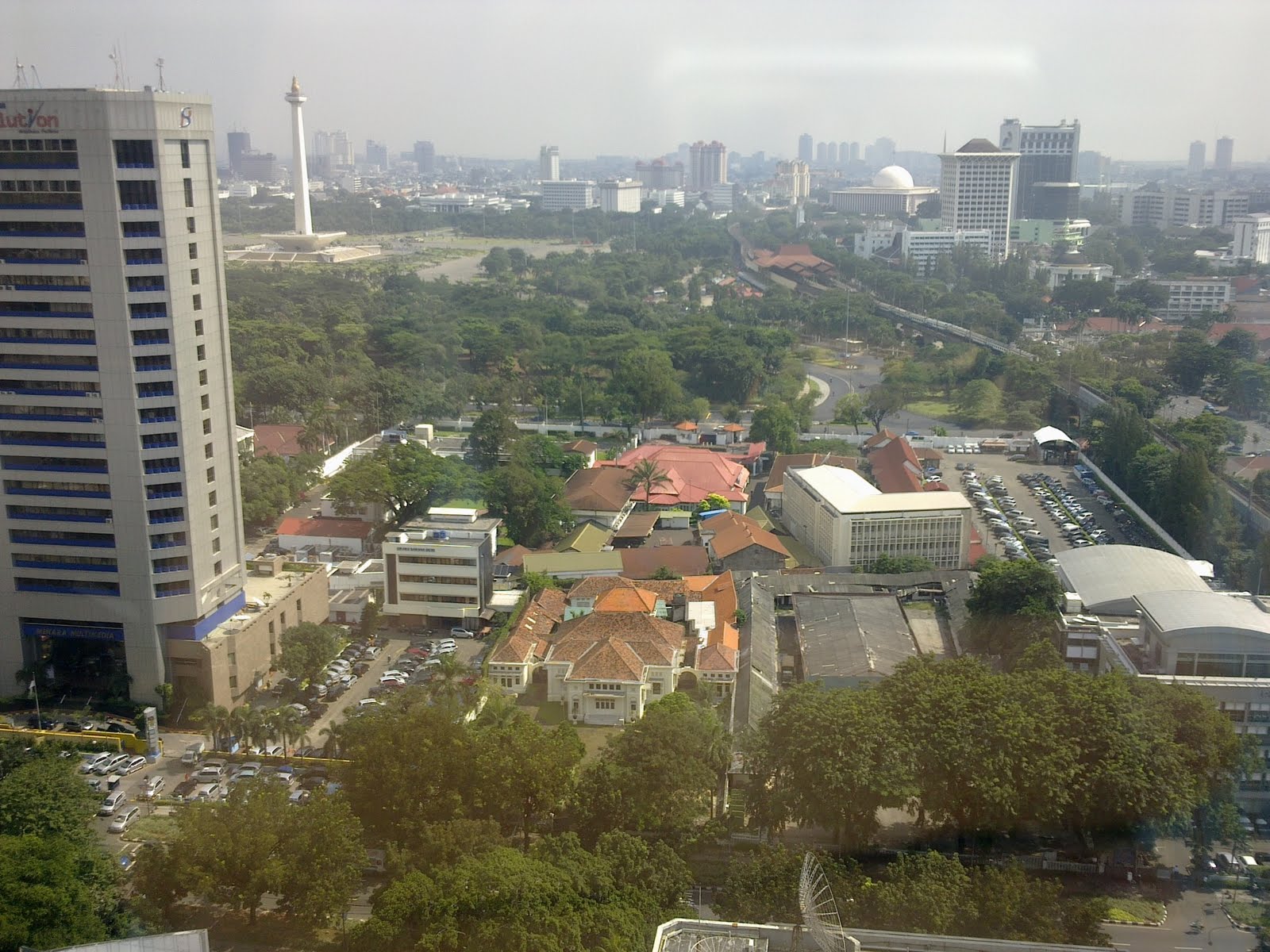
view from an office in Jakarta

Yes, there will be a delay of 6 months from the original date of June 30, 2011.

This is despite the fact that their family members from the G-20 group of industrial and emerging countries have been pushing them to stick to the original date since FASB and IASB announced their engagement in 2006.

So why the delay?

  1. Firstly, FASB cannot keep up the pace preparing for their marriage.

To meet the deadline, FASB and IASB would have to release about 10 proposals in the next two months and rushing through the due process of public comment, blah blah blah, reconsideration by the respective board and adoption.

2. Both FASB and IASB want their marriage only after aligning major areas of the accounting rules, such as revenue recognition, leases, financial instrument accounting and financial statement presentation.

3. FASB is 38 years old now but it has never worked so hard before in its life to get ready for the marriage. FASB has never released more than three or four proposals at a time for public comment.

4. FASB and IASB’s preparation were distracted by the financial crisis in 2008 and 2009. Both were forced to activate more resources to make changes to accounting rules related to the financial crisis. FASB dedicated one third of its 60 professional staff members during the crisis. IASB has a slightly smaller staff than the FASB.

Lessons from Raffles Town Club’s appeal

nearing completion?

In yesterday’s Today, it was reported that Raffles Town Club (RTC) has lost its arguments in the Court of Appeal on the following:-

  • failed to obtain tax deductions for the costs involved in leasing its land and in constructing the clubhouse on the ground that $108 million cost of acquiring the land from the State and the $91.4 million incurred in building the clubhouse were capital in nature and therefore
    not eligible for tax deduction;
  • secondly, it failed to have its membership fees taxed over 30 years, the life span of the club (this is an interesting attempt in defining the timing of revenue recognition and consequently, timing of taxability);
  • thirdly, it failed to secure relief for YA2001 from the tax department for the $53.28 million in damages it had to pay members after it lost the 2005 class action suit filed by several thousand members who claimed the club had falsely led them to believe they were part of an exclusive establishment and;
  • lastly, it failed to secure tax deductibility for the $2.34 million that RTC paid for geomancy fees.

Consequently, RTC is liable to pay tax for the Years of Assessment 1998-2003 on the full amount of $526.14 million it collected from its 19,000-odd members who had paid $28,000 each to join.

I have quoted verbatim the learning points from Justice Phang’s concluding remarks:-

  • “Where ordinary accounting principles run counter to the principles of tax law, they must yield to the latter for the purposes of computing gains and profits for tax.”
  • “Accounting and tax have different objectives in mind. Financial accounting is intended to provide information regarding firm performance to the market place while taxable income is prescribed by the government to meet budgetary needs … Regardless of how persuasive accounting evidence is, the prerogative still lies with the court to decide whether a particular item should be regarded as income that has accrued for the purposes of liability to tax.”
  • He pointed out that while accounting treatment focuses on the balance sheet, “taxation requirements are centred on the profit and loss accounts, so that the distinctions between revenue and capital, which are vital for tax purposes, may be lost in the accounting treatment”.
  • Concluding, he said: “I am also of the view that the present case turns on how well-established tax principles and tax law would apply rather than on the correct treatment of the items brought to tax.”

ACRA – Changes to note

my lunch place in Jakarta

Dear friends,

The Accounting and Corporate Regulatory Authority (ACRA) has announced that it will be implementing several initiatives as an impetus for locally incorporated companies to comply with corporate regulatory requirements as well as to acknowledge companies who have made the effort to comply.

For a start, ACRA will focus on the preparation of the annual financial statements, the holding of Annual General Meeting (AGM) and the filing of the Annual Returns (AR). The initiatives are as follows:-

a) Launch of “Colour-coded Compliance rating”. This is a rating system that recognises companies with a good record for holding its AGM on time, tabling and filing up-to-date financial statements and Annual Returns for the year in question with a positive compliance rating (in the form of a green tick) which makes them eligible for a Certificate of Compliance; while those which were non-compliant in their filing would be given a negative rating (in the form of a red cross). The compliance rating record and other relevant information for all locally incorporated companies will be reflected on ACRA’s free online Directory of Registered Entities for inspection by the public.

b) Issuance of “End of Financial Year Reminder” to provide an earlier alert to companies of the requirement to table up-to-date financial statements and to hold AGM timely with our new End of Financial Year (FY) Reminder, and

c) “Shortening of the Extension of Time” which will reduce the maximum allowable period for extension of time to hold AGM from 3 months to 2 months.

My comments

  • The rating system (just like for the hawker stalls) – What are the purposes? Firstly, of course to encourage compliance. Secondly, could the rating be used to guide your corporate customers’ and suppliers’ decision as to whether to deal with your company? For hawker stalls, would a C-rating discourages people from patronising your stall? We will wait and see the effect of this.

  • The reminder system to comply – In my opinion, this is the most useful aspect if implemented properly. ACRA should introduce even easier ways for companies to comply by simplifying further the filing processes.

I am looking forward to that.

(Announcement copied from ICPAS’s email to members for your information.)

Misnomer between FRS12 and FRS40?

a new hotel taking shape

The second part of Tan Eng Juan/Tan Kai Guan’s article on Accounting for Deferred Tax in Sep/Oct2009 Singapore Accountant touched on the following areas:-

What if disposal of investment properties “attracts a badge of trade” ==> Consequently, gain/loss from such transactions would be subject to tax. Both professors got no issue with that.

The two professors are however unhappy with when such entities SHOULD have started accounting for deferred tax on these properties. They posit that:-
a) deferred tax should have been provided for when FRS12 was adopted in year 2001 and;
b) accounting for deferred tax should not started only year 2007 ie. the year FRS40 was adopted.

Why?

1. SAS12 to FRS12 effected on April 1, 2001
Assuming gain on disposal is taxable, SAS12, in the past, said deferred tax has to be provided for IF the timing differences affect P&Ls.
But now FRS12 said we must provide for deferred tax on ALL temporary differences, regardless or not they affect P&Ls.

2. FRS25 to FRS40 effected on January 1, 2007
Under the extinct FRS25, revaluation surplus is taken to reserve (ie. never to P&L).
Under the currently in force FRS40, fair value gain is taken to P&L.

The simple point is that while FRS12 has been in force about 6 years earlier than FRS40, have most companies been accounting for deferred tax as tax expense in P&L since 2001? The two professors seem to imply that most did not. During those 6-7 years, deferred tax on revaluation of investment property will be debited to “revaluation reserve” (instead of P&L).

Impact? – Profit figures are overstated over those years while the overall value of shareholders’ equity remain neutral.

Director fined for lodging false data

Who did it? CSI team, pls check for finger prints and DNA.

Dear Staff of Corporate Secretarial firms, directors-wannabes and of course, Directors of companies,

Please be informed that a local director was recently fined $21,000 for changing the addresses of foreign directors to a local address, with full knowledge that the information is false.

Why did she, Ragini Dhanvantray of Rivkin Consultancy, do that for?
She is currently the local director of companies with foreign directors.
The Companies Act stipulates that every company must have at least one director ordinarily resident in Singapore.
Perhaps (I speculate here, without basis) she is thinking of quitting as local director of these companies as these foreign directors/shareholders may have gone missing and have not be meeting their obligations to her and the companies.
She came up with the idea of changing the addresses of these foreign directors and subsequently follow with her resignation as director.

Points to ponder

  1. How were these false information found out?
  2. As the Companies Act is currently under review, should the relevant authority/committee consider possible improvement to the stipulation for a local director and specify the roles and responsibilities of these directors? Less will come forward to offer themselves as local directors if these directors are constantly hauled to Court, ACRA, IRAS, creditors, customers, employees etc etc to answer queries on companies abandoned by these foreign shareholders cum directors. If less are willing to come forward, what are implications to Singapore as a business hub?

We were repeatedly reminded that you have no lesser responsibilities as a local director or a nominee director. A director is a director! Oxymoronic?

Accounting for Deferred Tax – A Mispractice

chingay 2010 colours

Tan Eng Juan and Tan Kai Guan, two Associate Professors from NTU wrote a very interesting article on “Accounting for Deferred Tax on Investment Property in Sep/Oct2009 Student Accountant.

Their paper argued that we should NOT provide for deferred tax on investment property if the gain on disposal of those properties is NOT taxable. If gain on disposal is a badge of trade ie. such gains are thus taxable, then deferred tax should be accounted for.

Their supporting arguments in favour of their position:-

a) FRS12 said deferred tax should only be accounted for if and only if “it is probable that recovery or settlement of that carrying amount will make future tax payments larger (smaller) …” ==> In the absence of capital gains tax in Singapore and if the profit/loss on disposal has no tax implication, then why are we wasting time accounting for deferred tax?

b) If fair value adjustment to asset values have no tax implications on disposal, then why are we accounting for deferred tax? We should NOT account for deferred tax for reason that the fair value adjustments are reflected in P&L and thus affect the current profitability and thus tax expense.

c) Even if higher fair value is due expected higher rental for its properties, there is still NO basis to account for deferred tax on the higher fair value. Why?
As the higher rental income for each future period would be subject to income tax and thus higher tax expense for that future period, there is thus no basis to subject changes in fair value to deferred tax.

If both these professors are correct, what are the implications for entities that had been accounting for deferred tax all these years on non-taxable gains even if they were to be realised in the future?

Budget 2010 – Productivity and Innovation Credit


It was announced in Budget 2010 that a Productivity and Innovation Credit (ie.“The Credit”) will be available for 5 years for Year of Assessment (YA) 2011 to YA 2015. The Credit will provide significant tax deductions for investments in a broad range of activities along the innovation value chain.

On such activities is investing in automation. Of course, IRAS defines “automation” as costs incurred to acquire “prescribed automation equipment” (e.g. laser printer, modem).

You would be entitled to 250% allowance for the first $300,000 of qualifying expenditure, 100% allowance for the balance expenditure.

Example: Laptop costs $2,000
Capital Allowance under the Credit = 250% x $2,000 = $5,000.

Taxpayer can either claim $5,000 as capital allowance in its tax return or opt to convert such capital allowances in respect of Laptop into a cash grant. The cash grant is computed at 7% of the capital allowance under the Credit ie. $350.

Question – Why the flexibility for you to choose to claim or to convert?
The simple answer is taxpayer should claim if it could help to save on paying 17% corporate tax and you should covert to cash if there is very little or no tax payable eg. for new company with exempt income.