Mr Goh Lian Tse, what are you talking about?


Mr Goh Lian Tse, Chairman and CEO of Innovalues, has written in to BT Forum yesterday in an attempt to salvage some “face” for the embarassing debacle of appointing a bankrupt to the position of Group CFO.

  • He said his company’s whistle blowing policies are working fine despite conceding on the lapses in their hiring procedures. I wonder who blew the whistle?
  • Mr Goh said the employee was the country financial controller for a Malaysian plant and he was brought to Singapore with a view to be appointed as the Group CFO. Basically his simple defence here is that the appointment to Group CFO position was not confirmed yet. But is he also implying that it is all right for a bankrupt to be a country financial controller in Malaysia but not good enough to be a Group CFO in Singapore? Please enlighten me.

Mr Goh, please confirm whether the said employee is being considered for the position of Group CFO or not given the 2 contradictory statements I am quoting from your letter to the Forum.

  1. “He was redeployed to Singapore with a view to being confirmed as group financial controller.”
  2. “At no time was the said emplyee being considered for the CFO position.”

“Why can’t a bankrupt be a CFO?”
I agree that a person, bankrupt or otherwise, would need to have some income to keep oneself alive and to pay his/her creditors. But the key question is whether a bankrupt can be a CFO? In my opinion, NO. As a bankrupt, the person has demonstrated that he/she is unable to manage his own financial affairs. And thus I am unable to justify a bankrupt to manage the financial affairs of a company where the likelihood of many are at stake.

Are you a bankrupt?

If you are, I am sorry you are disqualified from being appointed as the Group CFO of a public listed company.

In yesterday BT’s, it was reported that Innovalues nearly appointed a bankrupt as their Group CFO. The process was only halted after someone anonymously sent a copy of an “individual insolvency search result” to a director of Innovalues.

Apparently the poor chap has verbally informed the interviewer of his status BUT somehow, nobody (including the chap himself/herself) cared to put that information on paper.

Consequent to that embarassing revelation, Innovalues has, of course, promised to do better on their recruitment procedures.

And by the way, the position is still open.

Cross border billings

stealing in progress?

Have you been doing cross border billings? Of course, you have not. I hope…

For those who are not familiar with it, here is the explanation. Imagine you have a company in China and also a company in Hong Kong. For businesses secured and completed in China, the billing ie. the invoice is issued from the Hong Kong company.

Why?

Apparently many SMEs, with the above set up, are taking advantage of the 9% discrepancy between the corporate tax rates of two countries (Hong Kong 16.5% and China 25%).

They have been booking their mainland’s revenue in the lower tax region in Hong Kong.

So can we do the same between Singapore and regional countries? You better not as apparently Chinese and Hong Kong authorities are said to be working together to clamp down on such arrangement.

Words and figures differ

What if Edgar drew a cheque like this where the words and figures are different…

“Amount – Five Thousands Dollars Only $500/-“

In the Forum page of ST a couple of days, DBS Bank apologised to the account holder for wrongly clearing a cheque where the words and figures differ. DBS said they should not have cleared the cheque.

I wish to question whether DBS’s position of not clearing such a cheque is legally correct.

In the Banking Law class that I attended many years ago, I was told that the Bank should honour the cheque based on the “words” stated.

Has the law changed since the years after my Banking Law class? Or have I heard wrongly? If you are not from Singapore, can share with me your country’s practice?

IASB and FASB are doing something together.

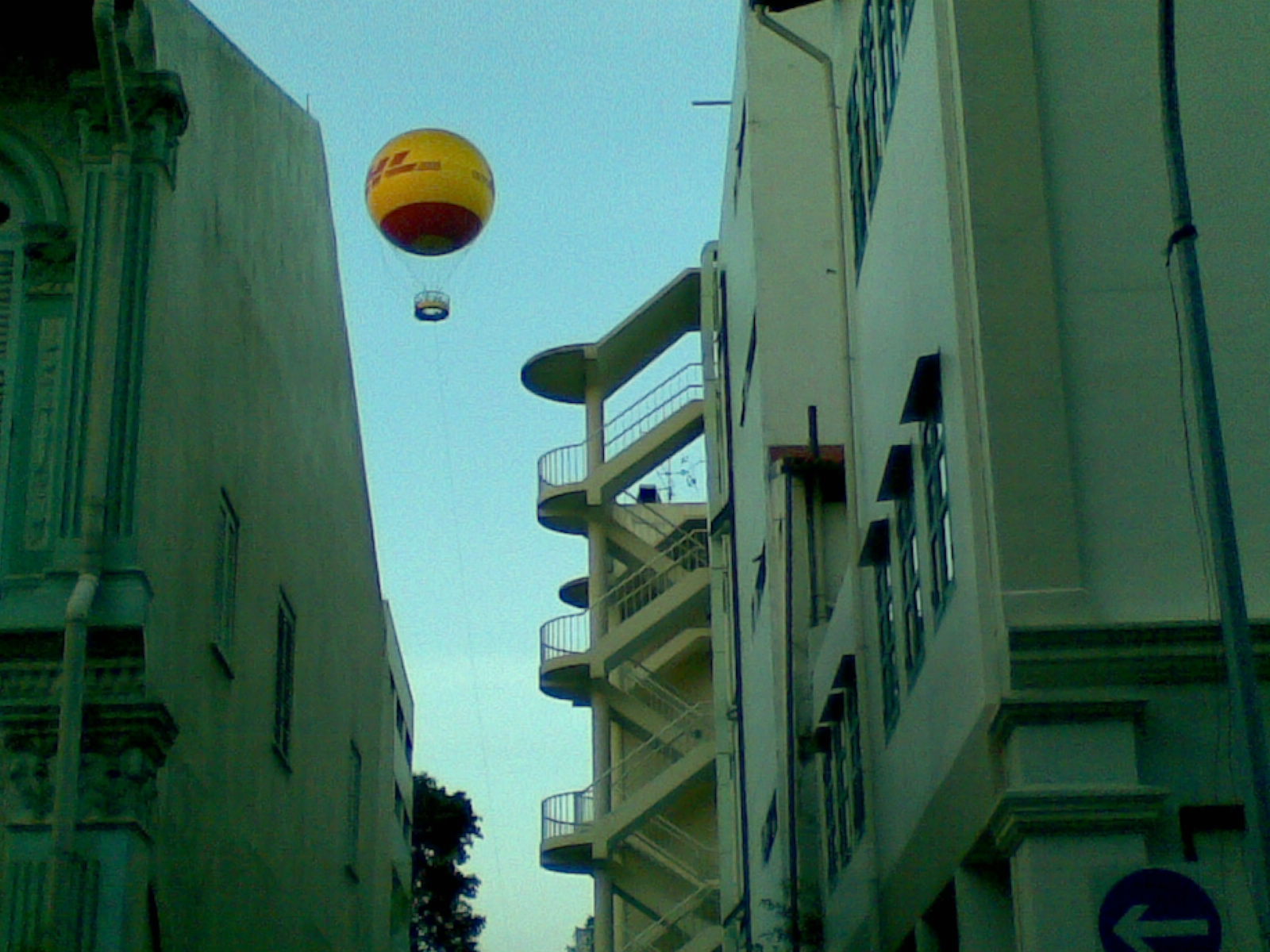
Marina Viaduct’s skyline now

Who are they?
IASB – International Accounting Standards Board
FASB – US’s Financial Accounting Standards Board

What have been doing together?
Essentially trying to move the two standards together.
They are planning to do it over 3 phases ie. A, B and C.

What are the 3 phases?
Phase A – completed in Sep 2007 with the issuance of FRS 1R. The FRS introduces the use of some American terminologies. The use of these terms for Singapore is not compulsory. Thus expect confusion in Singapore. Examples,
– Balance Sheet is “Statement of Financial Position”
– Cash Flow Statement is “Statement of Cash Flows”

Phase B
Mr Yeoh Oon Jin, Assurance Leader, PwC Singapore, said the Phase will take a few years to complete and would cover areas on how to prepare the respective statements. Examples,
– what income and expenses items to be classified under which totals and sub-totals in which statements etc etc etc
– whether direct or indirect cashflow presentation should be adopted

Phase C
While they have an idea of what they want to do, no point remembering them as it would too long down the yellow brick road for any certainty of being effected.

Reference – ACCA Focus Q2 2008 pp13-15

Why do you rob banks?

a party in KL worth the memory

A reporter once asked famous bank robber, Willie Sutton: “Why do you rob banks?”
Willie simply replied: “Because that’s where the money is!”

I am sure you will get the same answer if you manage to ask those robbers of banks and ATMs in Malaysia.

In the current new term of my classes, I asked the students the reason as to why did they decide to take up ACCA course.

A student duly responded that it is because ACCA is a qualification regularly asked for in the job advertisements she has reviewed.

So for those who have decided to start and complete your ACCA course, it is a good decision … Good day.

Tax on your Windfall…

Last month, the Malaysian government decided to implement the provision under the Windfall Profit Levy Act 1998 ie. impose a 30 per cent levy on returns on assets above the 9 per cent threshold of the Independent Power Producers’ (IPPs) audited accounts.

Apparently, the law would effectively mean a higher corporate tax rate on profits made by companies.

While at this moment, the impact is limited to IPPs. But should the government’s fiscal conditions worsen, will this “martial law” be suddenly applied on other sectors that too are doing well.

Such laws confuse investors. They blur visibility in investing in a country. While the law has been around since 1998 (apparently), it was not implemented.

HK outranked Singapore

my ketchup-filled fish ball noodle

ACCA released a report in BT today after conducting a survey among ACCA members in Singapore, HK, UK, US, Canada and Australia to rank their respective tax system in terms of fairness, simplicity and transparent.

The good news is that Singapore and Hong Kong have the fairest, simplest and most transparent tax systems, out of six major developed countries.

The bad news is that Hong Kong ranked better than Singapore in all 3 areas.

The question that matters is whether having a tax system that is fair, simple and transparent translates to real comparative advantage against these big economies.

Or is it a hollow victory for Singapore and HK as it basically reflects the smallness of its geographic size and economic complexities?

SME Rebate Scheme

I quote…

“The SME Rebate Scheme is a 2-year assistance scheme to help locally registered SMEs* adjust to rising business costs.
You are invited to apply for the SME rebate at our website http://www.smerebate.gov.sg/ if your firm meets the following criteria:-
i. For a non-manufacturing firm:
– Business must be registered in Singapore
– Fixed Asset Investment (FAI) of less than S$15 million
– Not more than 200 employees
ii. For a manufacturing firm:
– Business must be registered in Singapore
– Fixed Asset Investment (FAI) of less than S$15 million
Please be reminded to submit your application by 31 July 2008 to receive cash rebates pegged to the total employer and employee CPF contributions made by your firm over two years for the period July 2007 to June 2009.

Firms that apply after 31 July 2008 will only qualify for the rebate for the period July 2008 to June 2009.
Eligible firms will receive notification letters from CPF Board indicating the date and amount of payment.
Please visit the SME Rebate Scheme website (http://www.smerebate.gov.sg/) for more information.” Unquote…

GST-inclusive price

I have been paying attention to the numerous huge advertisements by the many industry players in the red hot lasik market in Singapore. Prices of lasik is definitely on a downtrend and possibility of hitting sub-$1,000 per eye for standard lasik is very real. (someone told me the limit has been breached already)

In today’s national paper, I notice a lasik provider has now included the GST-inclusive price of $2,341.16 into the advert albeit in a smaller font size.

In the heat of competition, perhaps many have forgotten the small detail of the need to place GST-inclusive prices.

What is the Law?
According to reg 77(1) of GST regulations, “where a taxable person publicly displays or advertises the price of any supply of goods and services he makes, or intends to make, it has to be the “GST-inclusive” price.

Any exception to this law must be approved by IRAS.

Edgar says…
While such taxable persons may not be sufficiently in tune with all details, I wonder whether the advertising agents or media owners should play a role in removing such “printing errors or omissions”.